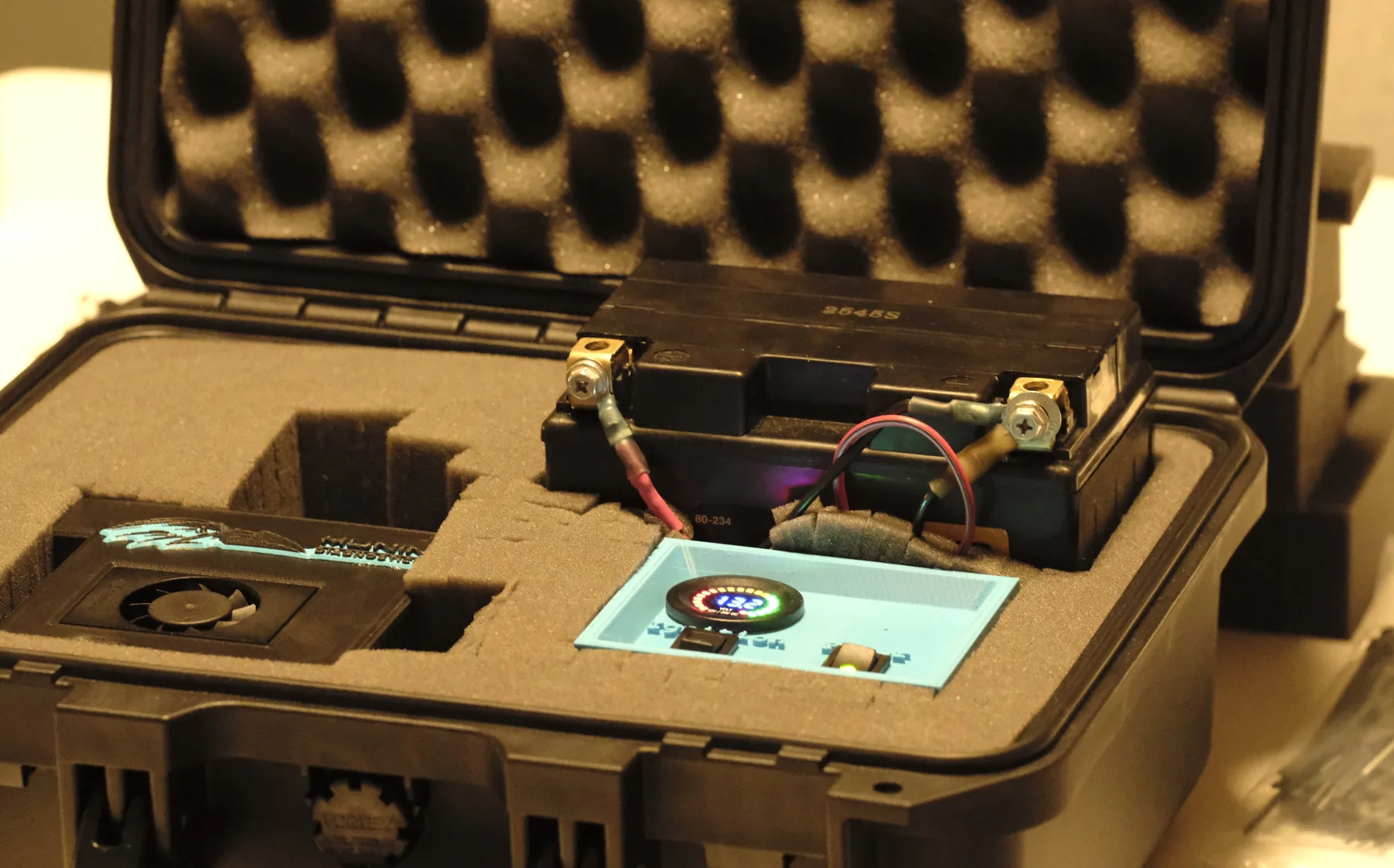
Munin learns how your particular car behaves, as it is when Munin is installed, and measures how far it moves away from that over months and years.
The problem
Set when the car's own limit has been passed.
It tells you something is wrong, not that something is about to go wrong. You get a code and a general explanation, but little about the history behind it or where the car is heading.
Follows the car while everything is still within what it usually does.
Munin measures the change over time, drive by drive. On the test car, a thermostat fault was seen in the data without the car having set a fault code. There is still time to plan.
The core
Most systems ask whether something is about to fail. Munin also asks how far the car has moved since Munin was installed. That is not the same question.
A reference that moves with the car sees fast changes. Wear spread over four or five years slips into the reference and disappears. That is why Munin's reference follows the car through the first year, so it sees every season, and locks on the anniversary. After that, Munin never changes it on its own.
After a repair, the reference stays. It then shows whether the repair worked.
How
Munin works in sequence: it learns the car, sets a reference, and measures every drive against it. The result is an assessment in plain language, not a stream of numbers.
Over weeks, Munin builds a picture of how this particular car behaves, as it is. Nothing is preset for car type or engine.
Once the car has driven enough, Munin freezes a reference for each system. It follows the car through the first year and locks on the anniversary.
Every drive is measured against the reference. The analysis layer, Hugin, assesses the whole drive and writes what should be watched or checked. Whether anything should be replaced is up to the workshop.
What Munin promises
Silence is better than a wrong diagnosis. Munin speaks up when the data supports it.
The system suggests. The owner decides.
A number never stands alone. Munin always says what it is worth.
Under the hood
Hardware
Jetson Orin Nano Super
Monitoring while driving runs locally on the device. After the drive, Munin trains its models on the device's GPU. Learning does not depend on a network connection.
Data source
OBD-II, passive listener
Munin reads the car's standard diagnostic data and never sends anything that changes the car. More data sources, such as reading the car's CAN bus directly, are planned.
Where it happens
Learning in the car, the report from Hugin
Monitoring and learning happen on the device. When a report is made, a selection of the drive's data is sent to a large language model in the cloud, Claude from Anthropic, which writes the assessment. Automatic reports are off until the owner turns them on.
Approach
Self-learning, not hard-coded
No fixed thresholds per car type. Munin builds its own understanding of each individual car, and a new car gets its own profile automatically.
Test cars
Munin is developed on real cars, and I'm happy to take on more. I'm especially looking for petrol cars with six or eight cylinders, and makes other than the one I have. No long-term commitment: Munin is connected, you drive once, and you get an assessment of the car. The car must have a Norwegian registration number. I'm based near Ålesund, Norway.
Get in touchAbout the name. In Norse mythology, Odin had two ravens. Munin, memory, flew out over the world, observed and remembered, and brought the knowledge back. Hugin, thought, is the name of the analysis layer that writes the reports.